 (850) 655-0350
Extra Protection
Protect your cigars from over drying or mold with Boveda 69% Relative Humidity 2-Way Humidity 60 gr Control bags. Our extra protection also covers damages during shipping.

Your cart is empty
Buy CigarsBy placing an order, you agree to pay all customs duties, taxes, and import fees required by your local authorities. You are solely responsible for knowing and complying with your country’s import laws regarding cigars before ordering.
Cigar Country is not responsible for any delays, holds, confiscations, seizures, returns, or destruction by customs. No refunds will be issued for orders affected by unpaid charges or import restrictions.

7 min read

Choosing a cigar from a well-stocked humidor can be both a thrill and a challenge. With countless brands, blends, and sizes, how do you select the perfect one for the moment? This isn’t a simple checklist; it’s an art that balances occasion, palate, and time.
This guide goes beyond the basics to give you the framework that seasoned aficionados use to choose a cigar with confidence and purpose every single time.
Before anything else, consider the context. A great cigar at the wrong time is a wasted experience. Ask yourself: “How much time do I have, and what is the occasion?” The size (vitola) of a cigar directly dictates the length of the smoke. A small Corona might be a 30-minute affair, perfect for a short break, while a grand Churchill can be a two-hour commitment.
As a quick reference, here’s an unscientific but very useful chart to guide you:
But size is more than just time. The ring gauge (a measurement of the cigar’s diameter) profoundly affects the flavor. A thinner cigar will have a higher wrapper-to-filler ratio, making the wrapper’s taste more dominant. A thicker cigar will produce voluminous, cooler smoke, with the filler blend taking center stage. To start, it’s helpful to know the three most popular sizes in the world.
| Here are the three most popular sizes in the world | |||
| Most Popular Given Name | Ring Gauge | Length (Inches) | Aprox. Smoking Time |
| Corona | 42 | 5 1/2″ | 55 mins |
| Robusto | 50 | 5″ | 50 mins |
| Toro | 50 | 6″ | 65 mins |
This is the heart of the choice. A cigar’s flavor profile is a complex interplay between three main factors: strength, the wrapper, and the origin of the tobaccos.
Understanding strength vs. body
“Strength” can mean two things. Strength refers to the nicotine content (how dizzy it might make you). Body refers to the richness and texture of the smoke on your palate (light, medium, full). For beginners, it is crucial to start with a Mild or Mild-to-Medium strength cigar to avoid being overwhelmed.
The wrapper leaf is responsible for the majority of a cigar’s taste.
The soil and climate impart a signature flavor.

Finally, consider the price and the physical quality of the cigar. A cheap, poorly made cigar will always be a disappointing experience, regardless of the blend. Learning to recognize quality is a key skill for any aficionado.
A high price tag doesn’t always guarantee an amazing cigar, but it often reflects the quality and age of the tobaccos used and the skill required to blend them. An ultra-premium cigar might use tobacco that has been aged for a decade, a process that is incredibly costly.Remember that price and value are not the same thing. A perfectly constructed $8 cigar can be an “excellent value,” while a flawed $30 cigar can be a “poor value.” Life is too short to smoke mediocre cigars; it is always better to choose quality over quantity.
One of the most reliable indicators of quality is the reputation of the brand and the master blender behind it. Legendary families and blenders like the Fuentes, Padrons and the Garcias (My Father Cigars) have built their names on decades of unwavering consistency.
Choosing a cigar from a highly-respected manufacturer is like choosing a wine from a renowned vineyard. It’s a form of quality assurance, guaranteeing that the cigar has been made with the best tobaccos and the highest standards of construction.
Before you buy, take a moment to inspect the cigar. Your senses can tell you a lot about its quality.
Drink should complement your cigar, not overpower it, especially when you’re just starting. The goal is to find a pairing that enhances the subtle flavors of a mild cigar without overwhelming your palate. For your first pairings, stick to these simple and effective rules:
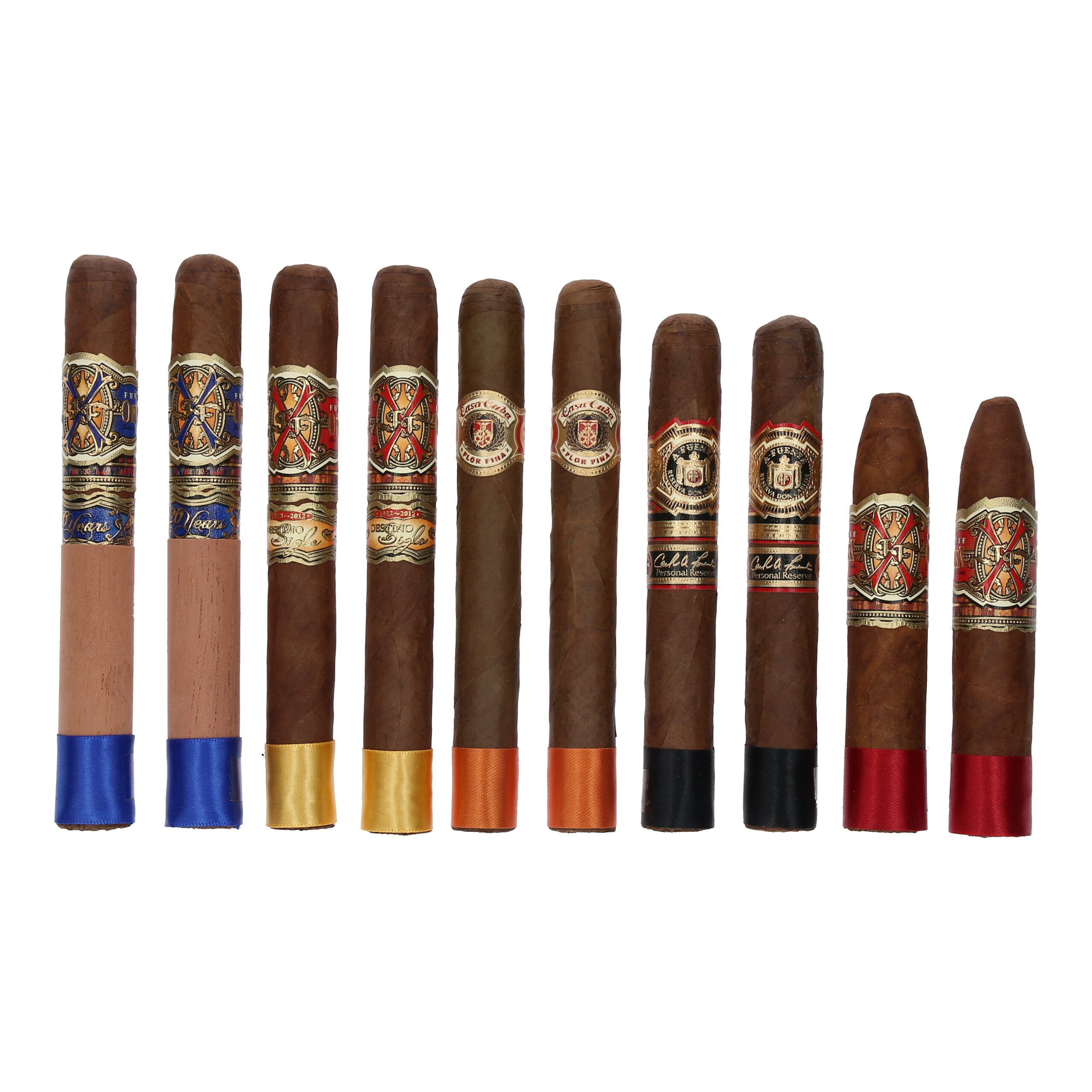
Starting with a trusted brand guarantees a quality experience. These brands are renowned for their consistency and approachable profiles. We’ve selected not only the best brands but also the specific cigars within their lines that are ideal for a first-time aficionado.
Often called “America’s favorite cigar,” Macanudo is the quintessential beginner’s brand. Their cigars are exceptionally smooth, mild, and famously consistent.
Ideal Beginner’s Cigar:Macanudo Cafe Hyde Park. This is a classic Corona-sized cigar that is the definition of smooth and creamy. It’s not too big, offers a perfect 40-minute smoke, and delivers gentle notes of cream, cedar, and nuts. It’s impossible to go wrong with this one.
The Ashton Classic is a benchmark for elegant, super-premium Dominican cigars. Made by the legendary Fuente family, its quality is impeccable, offering a step up in complexity while remaining perfectly smooth.
Ideal Beginner’s Cigar: Ashton Classic Churchill. While a longer smoke, this vitola is fantastic for beginners because its length provides an exceptionally cool and smooth smoke, preventing any harshness. It delivers sophisticated notes of cashews, almonds, and a touch of white pepper on the finish.
VegaFina has become a global best-seller, celebrated for its modern approach to smooth, handmade Dominican cigars. They are known for their flawless construction and incredible value, making them another can’t-miss choice.
Ideal Beginner ‘s Cigar: VegaFina Classic Robusto. This Robusto is a perfect example of the brand’s smooth character. It features a hand-selected Ecuadorian Connecticut wrapper and offers a consistently creamy Mild-to-Medium profile with gentle notes of cedar, almonds, and a hint of light pepper.

You can use your senses. Gently roll the cigar between your thumb and forefinger; it should feel consistently firm with no hard spots (which can block the draw) or soft, spongy spots (which mean it’s under-filled). Visually inspect the wrapper for any cracks, tears, or discolored spots. A well-made cigar will have a smooth, slightly oily wrapper and a neatly applied cap at the head.
Yes, absolutely. The shape and size (vitola) can have a profound impact on flavor. A key factor is the wrapper-to-filler ratio. Thinner cigars, like a Lancero, have more wrapper relative to the filler, so the wrapper’s taste is more dominant. Thicker cigars, like a Gordo, burn cooler and showcase the flavor of the filler blend more prominently. Tapered shapes like a Torpedo concentrate the smoke, which can intensify the flavors on your palate.
This is a classic question. Strength refers to the nicotine content—it’s the physiological “kick” you feel. This is primarily determined by the amount of potent Ligero tobacco in the filler. Body, on the other hand, refers to the flavor characteristic—it’s the richness, texture, and depth of the smoke on your palate. Think of it like milk: skim milk is light-bodied, while whole milk is full-bodied, but both have low “strength” (no kick).
The ironclad rule among aficionados is to always start mild and finish strong. If you smoke a powerful, full-bodied cigar first, it will overwhelm your palate. The intense flavors and nicotine will make it nearly impossible to detect and appreciate the delicate, subtle notes of a milder cigar smoked afterward. Always progress in strength to get the most out of each cigar.
Choosing a cigar is just the beginning of the journey. Once you have your selection, the next step is to master the ritual itself. To ensure you get the most out of your experience, we highly recommend reading our other expert guides: